
Seamless onboarding, documentation arrived within the first shipment, and replenishment cadence locked in during week one. Strong visibility and support end-to-end.
Loading...
Loading...
LAC Health leverages cutting-edge AI and machine learning to optimize procurement, predict demand, and streamline your healthcare operations. Partner with us to unlock next-generation efficiency.
500k+
SKUs Available
AI
Demand Forecasting
97%
On-Time Delivery
24hrs
Response Time
Unopened retail units are eligible for refund or exchange within 30 days of receipt. Initiate a return through your order history or call our retail support team, and we will email a prepaid return label within one business day.
Orders release within 24 hours and ship from the LAC warehouse closest to your ZIP (Chicago, Dallas, or Los Angeles). Most retail customers receive delivery in 1–3 business days with full tracking updates.
Yes. Add two or more cases, enroll in Subscribe & Save, or share your monthly usage and our retail team will apply bundle pricing instantly—no contracts required.
We accept all major credit and debit cards, digital wallets (Apple Pay, Google Pay), Buy Now Pay Later, and HSA/FSA cards. ACH and wire options are also available for larger storefront purchases.
Retail customer care is available 7 days a week by phone, chat, or email. Need product guidance, reorder help, or claim assistance? Text or call 844-LAC-6091 and we will respond within an hour.
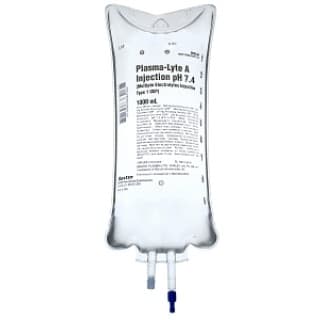
Product Description Baxter 2B2544X – SOLUTION, PLASMA-LYTE A INJ PH 7. 4, 1000ML, EACH PLASMA-LYTE A Injection pH 7. 4 (Multiple Electrolytes Injection, Type 1, USP), 1000 mL VIAFLEX Plastic Container PLASMA-LYTE A Injection pH 7. 4 PLASMA-LYTE A Injection pH 7.
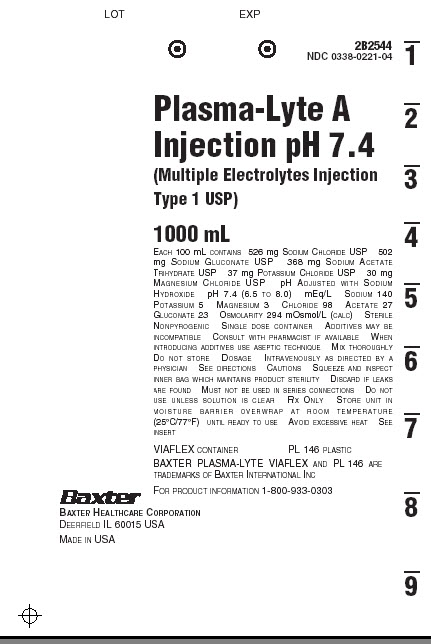
PLASMA-LYTE A Injection pH 7.4 (Multiple Electrolytes Injection, Type 1, USP) is a sterile, nonpyrogenic isotonic solution in a single dose container for intravenous administration. Each 100 mL contains 526 mg of Sodium Chloride, USP (NaCl); 502 mg of Sodium Gluconate (C6H11NaO7); 368 mg of Sodium Acetate Trihydrate, USP (C2H3NaO23H2O); 37 mg of Potassium Chloride, USP (KCl); and 30 mg of Magnesium Chloride, USP (MgCl26H2O). It contains no antimicrobial agents. The pH is adjusted with sodium hydroxide. The pH is 7.4 (6.5 to 8.0).
PLASMA-LYTE A Injection pH 7.4 (Multiple Electrolytes Injection, Type 1, USP) administered intravenously has value as a source of water, electrolytes, and calories. One liter has an ionic concentration of 140 mEq sodium, 5 mEq potassium, 3 mEq magnesium, 98 mEq chloride, 27 mEq acetate, and 23 mEq gluconate. The osmolarity is 294 mOsmol/L (calc). Normal physiologic osmolarity range is 280 to 310 mOsmol/L. Administration of substantially hypertonic solutions may cause vein damage. The caloric content is 21 kcal/L.
The VIAFLEX plastic container is fabricated from a specially formulated polyvinyl chloride (PL 146 Plastic). The amount of water that can permeate from inside the container into the overwrap is insufficient to affect the solution significantly. Solutions in contact with the plastic container can leach out certain of its chemical components in very small amounts within the expiration period, e.g., di-2-ethylhexyl phthalate (DEHP), up to 5 parts per million. However, the safety of the plastic has been confirmed in tests in animals according to USP biological tests for plastic containers as well as by tissue culture toxicity studies.
PLASMA-LYTE A Injection pH 7.4 (Multiple Electrolytes Injection, Type 1, USP) is indicated as a source of water and electrolytes or as an alkalinizing agent.
PLASMA-LYTE A Injection pH 7.4 (Multiple Electrolytes Injection, Type 1, USP) is compatible with blood or blood components. It may be administered prior to or following the infusion of blood through the same administration set (i.e., as a priming solution), added to or infused concurrently with blood components, or used as a diluent in the transfusion of packed erythrocytes. PLASMA-LYTE A Injection and 0.9% Sodium Chloride Injection, USP are equally compatible with blood or blood components.
None known
Clinical evaluation and periodic laboratory determinations are necessary to monitor changes in fluid balance, electrolyte concentrations, and acid base balance during prolonged parenteral therapy or whenever the condition of the patient warrants such evaluation.
PLASMA-LYTE A Injection pH 7.4 (Multiple Electrolytes Injection, Type 1, USP) should be used with caution. Excess administration may result in metabolic alkalosis.
Caution must be exercised in the administration of PLASMA-LYTE A Injection pH 7.4 (Multiple Electrolytes Injection, Type 1, USP) to patients receiving corticosteroids or corticotropin.
Animal reproduction studies have not been conducted with PLASMA-LYTE A Injection pH 7.4 (Multiple Electrolytes Injection, Type 1, USP). It is also not known whether PLASMA-LYTE A Injection pH 7.4 (Multiple Electrolytes Injection, Type 1, USP) can cause fetal harm when administered to a pregnant woman or can affect reproduction capacity. PLASMA-LYTE A Injection pH 7.4 (Multiple Electrolytes Injection, Type 1, USP) should be given to a pregnant woman only if clearly needed.
Safety and effectiveness of PLASMA-LYTE A Injection pH 7.4 (Multiple Electrolytes Injection, Type 1, USP) in pediatric patients have not been established by adequate and well controlled trials, however, the use of electrolyte solutions in the pediatric population is referenced in the medical literature. The warnings, precautions and adverse reactions identified in the label copy should be observed in the pediatric population.
Clinical studies of PLASMA-LYTE A Injection pH 7.4 (Multiple Electrolytes Injection, Type 1, USP) did not include sufficient numbers of subjects aged 65 and over to determine whether they respond differently from younger subjects. Other reported clinical experience has not identified differences in responses between the elderly and younger patients. In general, dose selection for an elderly patient should be cautious, usually starting at the low end of the dosing range, reflecting the greater frequency of decreased hepatic, renal, or cardiac function, and of concomitant disease or drug therapy.
Do not administer unless solution is clear and seal is intact.
There have been reports of positive test results using the Bio-Rad Laboratories Platelia Aspergillus EIA test in patients receiving Baxter gluconate containing Plasmalyte solutions. These patients were subsequently found to be free of Aspergillus infection. Therefore, positive test results for this test in patients receiving Baxter gluconate containing Plasmalyte solutions should be interpreted cautiously and confirmed by other diagnostic methods.
Reactions which may occur because of the solution or the technique of administration include febrile response, infection at the site of injection, venous thrombosis or phlebitis extending from the site of injection, extravasation, and hypervolemia.
If an adverse reaction does occur, discontinue the infusion, evaluate the patient, institute appropriate therapeutic countermeasures, and save the remainder of the fluid for examination if deemed necessary.
Excessive administration of Plasma-Lyte 148 Injection (Multiple Electrolytes Injection, Type 1, USP) may lead to metabolic alkalosis. Metabolic alkalosis may be accompanied by hypokalemia was well as a decrease in ionized serum calcium and magnesium.
An excessive volume of Plasma-Lyte 148 Injection (Multiple Electrolytes Injection, Type 1, USP) may lead to fluid and sodium overload with a risk of edema (peripheral and/or pulmonary), particularly when renal sodium excretion is impaired.
Excessive administration of potassium may lead to the development of hyperkalemia, especially in patients with severe renal impairment.
Excessive administration of magnesium may lead to hypermagnesemia.
When assessing an overdose, any additives in the solution must also be considered.
The effects of an overdose may require immediate medical attention and treatment.
As directed by a physician. Dosage is dependent upon the age, weight and clinical condition of the patient as well as laboratory determinations.
Parenteral drug products should be inspected visually for particulate matter and discoloration prior to administration whenever solution and container permit.
All injections in VIAFLEX plastic containers are intended for intravenous administration using sterile equipment.
Additives may be incompatible. Complete information is not available. Those additives known to be incompatible should not be used. Consult with pharmacist, if available. If, in the informed judgment of the physician, it is deemed advisable to introduce additives, use aseptic technique. Mix thoroughly when additives have been introduced. Do not store solutions containing additives.
Warning: Do not use plastic containers in series connections. Such use could result in air embolism due to residual air being drawn from the primary container before administration of the fluid from the secondary container is completed.
Tear overwrap down side at slit and remove solution container. Some opacity of the plastic due to moisture absorption during the sterilization process may be observed. This is normal and does not affect the solution quality or safety. The opacity will diminish gradually. Check for minute leaks by squeezing inner bag firmly. If leaks are found, discard solution as sterility may be impaired. If supplemental medication is desired, follow directions below.
Warning: Additives may be incompatible.

$89.03

Volume pricing, managed services, and consignment programs available through LAC Health procurement.
Contract & blanket PO support
GHX • Workday • SAP integrations



Delivery & Shipping
Check ETA for your dock in seconds.
Free standard shipping on orders over $75
Express and white-glove freight options available
Invite our procurement strategists into your planning room and we’ll deliver a clinically-aligned sourcing roadmap—complete with compliance, telemetry, and logistics tuned to your realities.

What procurement leaders and clinical teams are saying after deploying this SKU.
Seamless onboarding, documentation arrived within the first shipment, and replenishment cadence locked in during week one. Strong visibility and support end-to-end.
Arrived cold-chain validated with serialized lots pre-registered in our ERP. Teams aligned rapidly thanks to LAC’s transition kit and consultative launch.